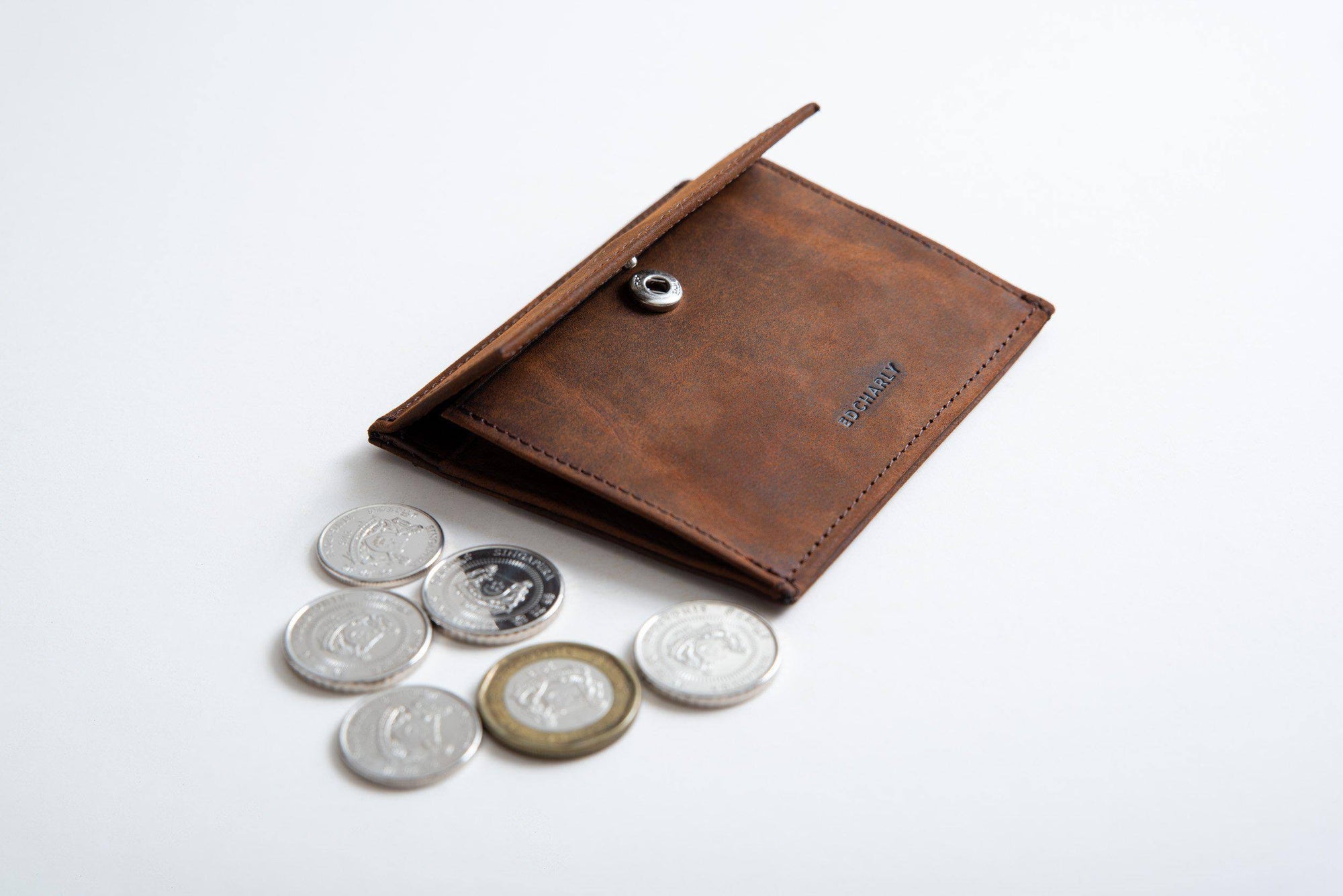
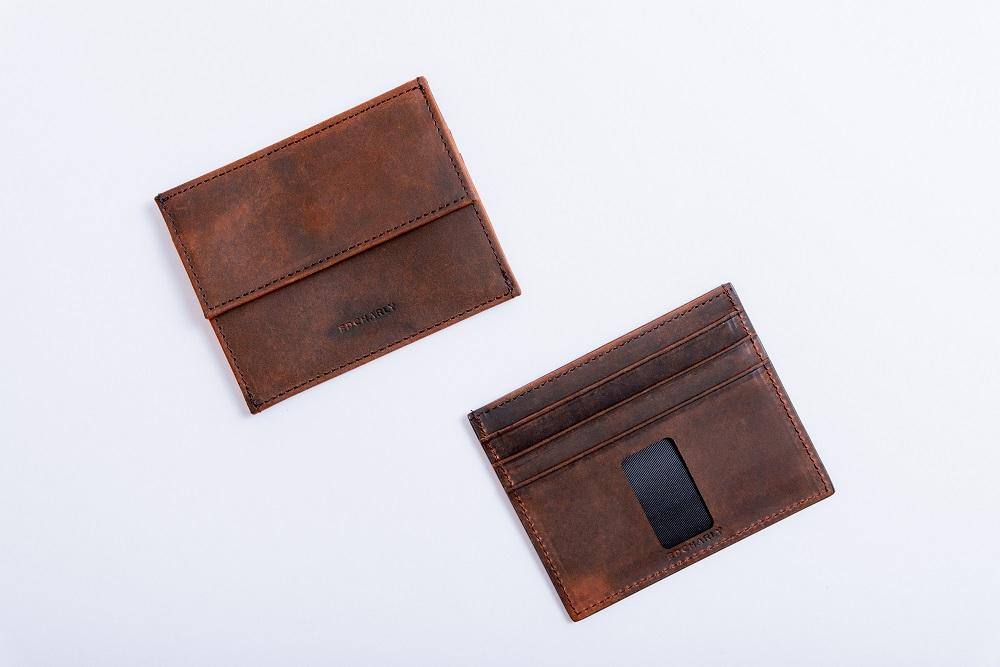
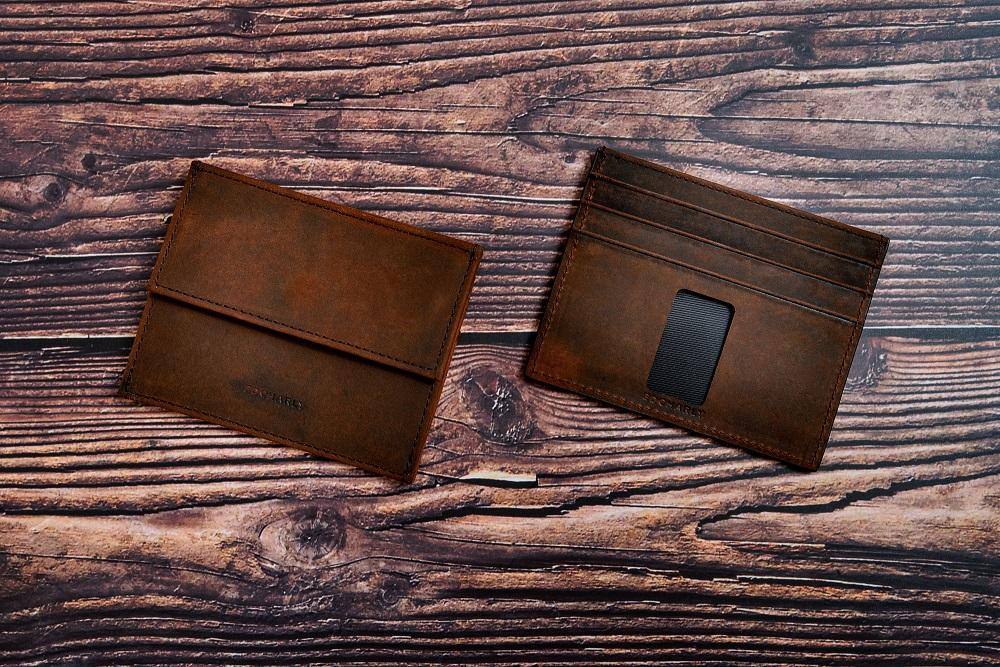
Crazy Horse leather is usually cow leather treated with oils and waxes to create a surface that changes with use. When it is bent, rubbed or lightly scratched, parts of the leather become lighter. Over time, these marks blend together and create its distinctive worn-in appearance.
When I first came across Crazy Horse leather, I was confused too. If it was considered good leather, why did it seem to scratch so easily?
I eventually realised that Crazy Horse leather was never intended to remain perfectly smooth and unchanged. The markings are part of its character and also the reason some people love it, while others may prefer something more consistent.

What exactly is Crazy Horse leather?
Despite its name, the Crazy Horse leather used for most wallets is not made from horsehide. It is normally made from cow leather.
Cow leather simply means leather made from the hide of cattle. It is widely used for wallets because it can be made soft or firm, smooth or textured, natural-looking or highly consistent.
What makes Crazy Horse leather different is the way its surface is treated. Oils and waxes are added to give it a slightly waxy feel and create changes in colour whenever the leather is handled.
When you press or bend the leather, you may notice the affected area becoming lighter. Rub it again and the colour may shift once more. The leather industry calls this the pull-up effect.
The term sounds technical, but the idea is simple:
The colour moves as the oils and waxes move within the leather.
This is why two Crazy Horse wallets may look slightly different even when they began in the same colour.
Many Crazy Horse leathers are made from full-grain cow leather because its natural surface suits this rugged style. However, Crazy Horse mainly describes the waxed finish and ageing effect; it does not guarantee that every leather carrying the name is full-grain.
The simplest way to understand it is that Crazy Horse describes how the leather looks and changes, while full-grain describes how much of its original surface has been retained. A leather can be both, but the two terms do not mean the same thing.
Why does Crazy Horse leather scratch so easily?

This was the part that confused me most.
On a conventional smooth wallet, a scratch usually looks more like a defect. On Crazy Horse leather, even light pressure can move the oils and waxes and make the affected area appear lighter.
Some of these marks are therefore changes in colour rather than serious damage to the leather.
If you gently rub a light mark with a clean finger or soft cloth, the oils may move again and make it less obvious. However, this does not mean Crazy Horse leather is scratch-proof or that every scratch will disappear. Deeper marks can remain.
As the wallet continues to be used, newer and older marks begin to overlap. Instead of one scratch standing out against a perfect surface, they gradually become part of its overall appearance.
Do scratches mean the leather is poor quality?
Not necessarily.
A good leather can still show scratches easily if it has been designed to develop this kind of appearance. Crazy Horse leather is a good example: its visible changes are part of the intended finish.
However, the name Crazy Horse alone does not guarantee quality. The quality of a wallet also depends on the leather used beneath the finish, how it was tanned and prepared, its thickness and the workmanship of the finished product.
This also does not mean that everyone must like the visible changes.
Someone else may look at the same Crazy Horse wallet and appreciate how every mark makes it more personal.
That is why judging leather only by how easily it scratches can be misleading. The better question is whether you like the way that particular leather is intended to age.
What is Crazy Horse leather patina?
Patina is the collection of changes that appear as leather is carried and handled.
On Crazy Horse leather, this can include:
- Lighter areas along folds and corners
- Darker areas where the wallet is touched frequently
- Small scratches and rubbing marks
- Changes in colour and shine
- A softer, more familiar appearance
Brown Crazy Horse leather often develops the look of an old leather jacket, a well-used travel bag or a vintage notebook cover.
I find “worn-in character” easier to understand than the word patina. The wallet gradually stops looking factory-new and starts looking like something that has travelled with its owner.
This can begin quite quickly. A Crazy Horse wallet may show its first changes within a few days or weeks, depending on how it is carried.
What does Crazy Horse leather look and feel like?
Crazy Horse leather normally has a matte or slightly waxy surface rather than a highly polished shine.
It may feel smooth and supple to the touch, although its softness or firmness can vary depending on the thickness of the leather and the wallet’s construction.
The colour is rarely completely flat or uniform. Even when it is new, you may see lighter areas where it has been folded or darker areas where it has been handled.
Brown is probably the colour most strongly associated with its rugged, vintage appearance. However, Crazy Horse leather can also come in blue, black and other colours. The pull-up effect may simply appear more obvious on certain shades.
What are the advantages of Crazy Horse leather?
People usually choose Crazy Horse leather because they enjoy:
- A rugged and relaxed appearance
- Visible colour variation
- A smooth, slightly waxy touch
- A wallet that becomes more individual with use
- A vintage appearance that develops naturally over time
Once the leather has developed more patina, new marks may also feel less alarming because they no longer appear against a perfectly untouched surface.
Instead of trying to preserve the wallet exactly as it looked on its first day, you allow its appearance to develop.
What should you consider before choosing it?
Crazy Horse leather may not suit you if you want your wallet to remain clean, formal and visually consistent.
Before choosing it, understand that:
- Light scratches can appear quickly
- The colour will change with handling
- Different parts of the wallet may develop different shades
- Water and conditioner may temporarily or permanently darken it
- Deeper marks may remain visible
These are not hidden disadvantages. They are part of deciding whether you will enjoy owning this kind of leather.
Is Crazy Horse leather waterproof?
No. Crazy Horse leather should not be considered waterproof.
Its waxed surface may provide some protection from brief contact with light moisture, but the result varies between leathers. Water can still darken the surface or leave a mark.
If your wallet becomes wet, gently blot it with a clean, dry cloth and allow it to dry naturally. Avoid hairdryers, direct heat and prolonged sunlight.
How do you care for Crazy Horse leather in Singapore?
Singapore’s humid weather makes storage just as important as cleaning.
Crazy Horse leather generally does not need frequent treatment. A few simple habits are enough:
- Wipe away dust with a clean, soft cloth.
- Let the wallet air-dry naturally if it becomes damp.
- Avoid keeping it in a sealed plastic bag or damp drawer for long periods.
- Keep it away from alcohol wipes and household cleaning products.
- Use a suitable leather conditioner only when the leather feels dry.
- Test conditioner on a less visible area first because it may darken the colour.
You can read our more detailed leather care guide for Singapore’s humid climate for storage and mould-prevention advice.
Who should choose Crazy Horse leather?
Choose it if you like a wallet that becomes more rugged, varied and personal as you carry it.
It is particularly suitable if you enjoy:
- Vintage leather jackets and travel bags
- Visible patina and signs of use
- Earthy, casual styling
- Objects that look better to you after they have been used
Choose a more consistent leather if scratches bother you or if you prefer your wallet to retain a neat, uniform appearance.
Our guide to choosing the best leather for your wallet explains how Crazy Horse compares with full-grain calf, Saffiano, pebble grain and Smooth Black leather.

Why we chose Crazy Horse leather for the Ed Classic
When we were preparing the Ed Classic for Kickstarter, we wanted to introduce more than another compact and functional wallet. We also wanted the product to feel recognisably different from the many conventional leather wallets already available.
At the time, Crazy Horse leather was attracting considerable attention among people who enjoyed vintage leather and everyday-carry products. That interest mattered for a Kickstarter launch because we were presenting a new wallet design online and needed a material that could give it an immediate and memorable identity.
However, we did not choose Crazy Horse leather simply because it was popular.
The full-grain Crazy Horse leather we selected had a smooth, slightly waxy touch and enough suppleness to complement the Ed Classic’s folded construction. Its natural colour variations also meant that every wallet would look slightly different and develop its own appearance through use.
The compactness of the Ed Classic came from its origami-inspired construction. Crazy Horse leather complemented that construction by adding texture, durability and personality. The design felt different, and the material looked and behaved differently too.
Its tendency to develop marks was not something we needed to hide. It became part of the idea that every Ed Classic would gradually become personal to the person carrying it.
Crazy Horse leather became one of the original material choices for the Ed Classic Kickstarter campaign. The attention surrounding the leather helped people notice it, but its tactile feel, full-grain character and changing patina gave it a reason to remain part of the collection.
Years later, it remains one of our most recognisable materials. Trends may introduce people to a leather, but the way Crazy Horse leather wears and becomes increasingly personal is what gives it lasting appeal.
You can explore the Ed Classic Crazy Horse leather wallet and see how this original material works with the wallet’s compact design.
Frequently asked questions
Is Crazy Horse leather made from horses?
The Crazy Horse leather used for most wallets is normally made from cow leather. The name refers mainly to its waxed, rugged finish rather than the animal.
Is Crazy Horse leather always full-grain?
No. Many Crazy Horse leathers are made from full-grain cow leather, but the name itself describes the finish and does not guarantee a particular grade. Check the material information for the specific product.
Does Crazy Horse leather scratch easily?
It shows light scratches and handling marks readily. Some are colour changes caused by movement in the oils and waxes rather than deep damage.
Can Crazy Horse leather scratches be removed?
Some light marks may become less noticeable after being gently rubbed with a clean finger or soft cloth. Deeper scratches may remain and become part of the patina.
Is Crazy Horse leather waterproof?
No. Its waxed surface may offer some resistance to brief contact with light moisture, but it is not waterproof and can still develop water marks.
Is Crazy Horse leather good for a wallet?
It can be an excellent wallet leather for someone who enjoys a rugged appearance, a slightly waxy touch and visible ageing. It is less suitable for someone who wants a completely consistent surface.
Why did Ed Charly choose Crazy Horse leather?
We chose it to give the original Ed Classic a distinctive material identity for its Kickstarter launch. Its full-grain character, tactile feel, tonal variation and ability to develop a personal patina complemented the wallet’s unconventional folded design.
How quickly will Crazy Horse leather develop patina?
Changes can begin within the first few days or weeks of regular use. The speed depends on the leather’s colour, handling, pocket contents and storage conditions.
What I learnt from Crazy Horse leather
I started by wondering how a supposedly good leather could show so many scratches.
What I learnt was that good leather does not always have to remain smooth and untouched. Crazy Horse leather should not be judged by whether it remains unchanged. Its appeal comes from the opposite: marks appear, colours move, and the wallet develops a lived-in character.
That will not be everyone’s idea of the perfect wallet, and that is perfectly fine.
If you enjoy a clean and consistent appearance, another leather will probably suit you better. If you want your wallet to develop a vintage look and become more individual with time, Crazy Horse leather may be exactly what you are looking for.
There is no single leather that is best for everyone. The better choice is the one that feels good in your hand and ages in a way you will enjoy.
Written by Ed, Founder of Ed Charly
Originally published 6 August 2024 · Last updated 3 September 2026
This guide is based on leather-industry references, supplier information and our experience working with Crazy Horse leather in small leather goods. Individual hides and leather finishes may behave differently.