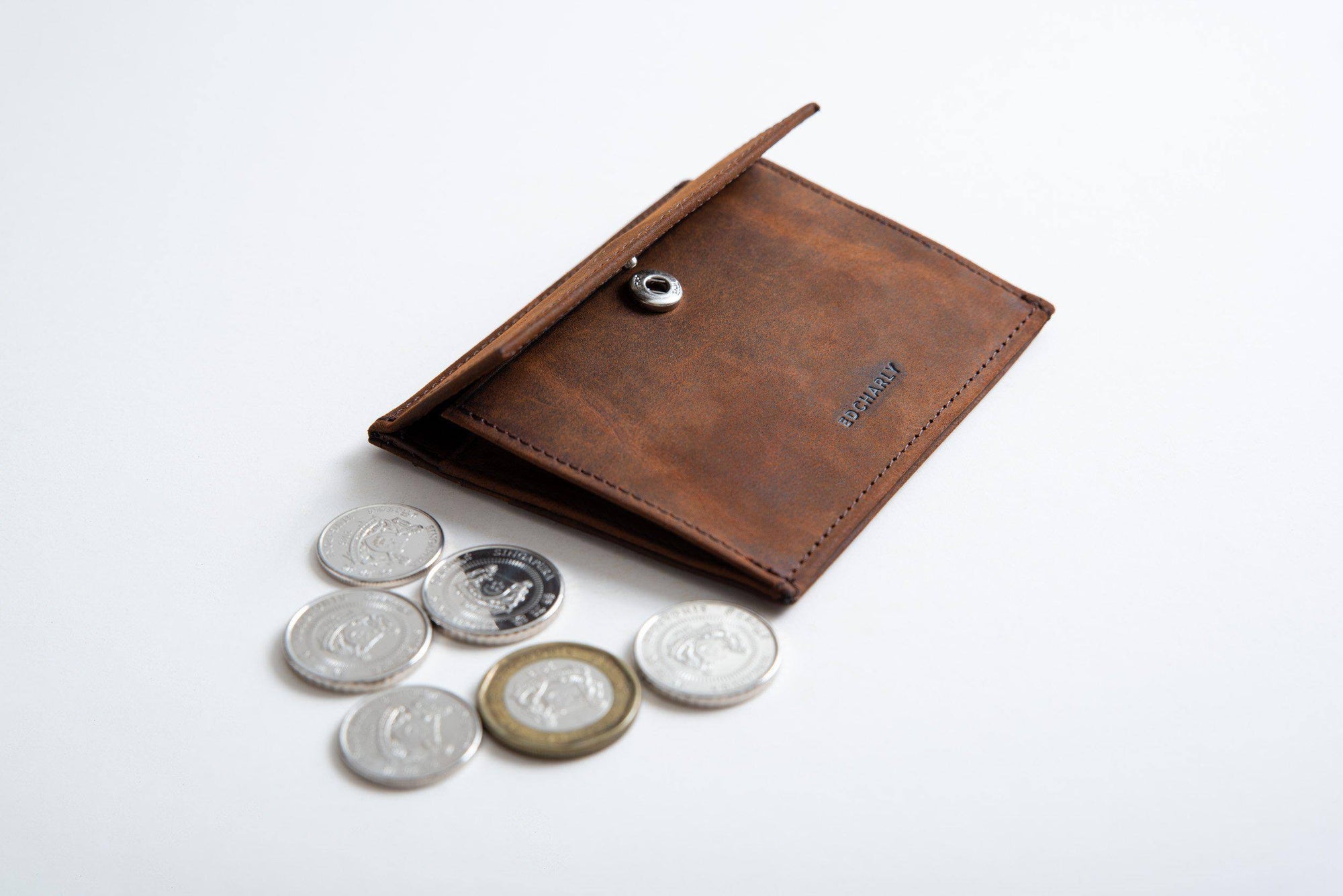
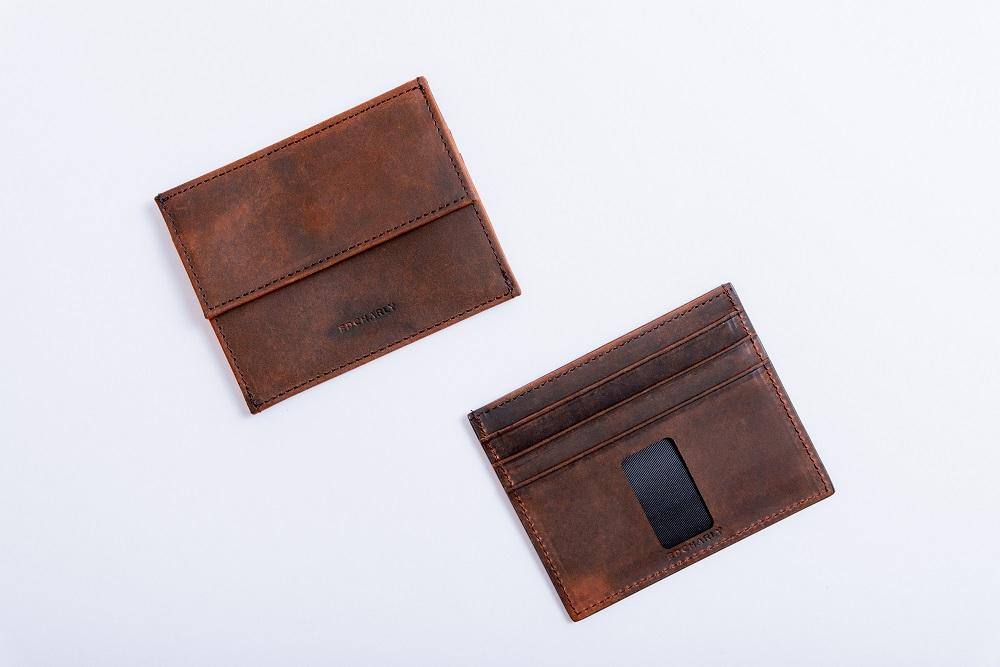
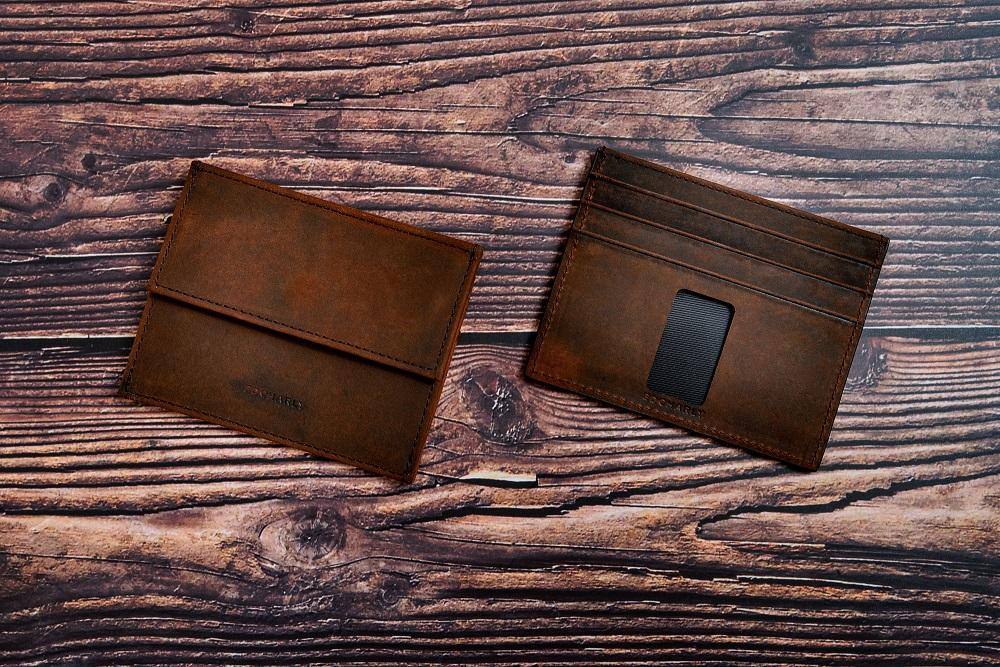
When I first started choosing leather for our wallets, I thought there would be one clear answer to one question:
What is the best leather for a wallet?
The answer I kept hearing was full-grain leather. People often called it the highest grade because it keeps the hide’s original outer surface and develops patina, the gradual changes in colour and shine that appear with use.
That sounded convincing! Until I began carrying and comparing different wallets myself.
Our calf leather felt soft and smooth, but small marks were easier to see. Saffiano felt firmer and continued looking much the same. Crazy Horse marked almost immediately, yet those marks created its vintage character. Pebble grain and our newer Smooth Black leather sat somewhere between those experiences.
That was when I realised I had been asking the wrong question.
One leather may feel softer, another may stay looking neater, and another may become more personal as it ages with scratches and marks. No single leather gives everyone the experience they want.
The best leather is the one whose feel and appearance you will still enjoy after carrying it for months or years.
What was I actually looking for?
I wanted to know what would happen after the wallet went into a pocket, rubbed against cards and keys, and was handled every day.
That led me to a much easier question:
Do I want my wallet to remain visually consistent, or do I want it to develop visible character?
Personally, I prefer consistency. I like leather that stays neat without making me worry about every new mark. That is why Saffiano, Smooth Black and pebble-grain leather appeal to me.
Someone else may prefer leather that records how it has been carried and gradually becomes recognisably theirs. For that person, full-grain calf or Crazy Horse leather may be more satisfying.
Neither preference is wrong. They simply lead to different choices.
Cowhide and calf leather: what is the difference?
This was the part I wish someone had explained to me first.
On most product pages, cowhide or cow leather means leather made from cattle. Calf leather is also cattle leather, but it comes from a younger animal and is often chosen for its finer, smoother feel.
I think of it like describing a shirt: “cotton” tells us what it is made from, “brushed” tells us how it was treated, and “blue” describes how it looks. Similarly, cowhide or calf tells us where the leather came from, full-grain or top-grain tells us something about its outer surface, and Saffiano, pebble grain or smooth helps describe what we see and feel.
Cowhide or calf tells us about the animal; full-grain or top-grain tells us about the outer surface, while Saffiano, pebble grain or smooth describes what we see and feel. That is why one wallet can be both calf leather and full-grain, or both cow leather and Saffiano.
Neither name tells us the complete story.
A calf leather wallet can also be full-grain, while cow leather can be given a Saffiano pattern, a pebble texture or a smooth finish.
Why I mainly choose cattle leather for Ed Charly wallets
Leather can also come from goats, sheep, pigs, horses and other animals. I keep returning to cattle leather because it is strong, can be prepared at a suitable thickness for a compact wallet, and can be finished in many ways, from soft and natural to firm, smooth or vintage-looking.
Cattle leather is also the most widely used leather globally. The Leather Working Group estimates that cattle account for approximately 69% of the world’s leather hides.
That does not make cowhide automatically “the best.” It makes it a versatile and practical choice for the wallets we make.
Full-grain leather: natural surface, visible character
The word grain simply refers to the leather’s original outer surface.
Full-grain leather keeps that surface instead of sanding it down to make every part look perfectly even. Small pores, fine lines and natural variations may therefore remain visible.
At first, I assumed full-grain meant completely untouched leather. It does not.
Leather still needs to be tanned before it can become a usable material. Full-grain leather may also be coloured, oiled, waxed or given a light protective finish. The important point is that its original grain surface has not been removed.
Our blue full-grain leather is a useful example. It has a light protective finish that helps the blue appear more even and offers some protection in everyday use. The natural grain remains visible, and the leather can still crease, gain a gentle shine and show marks over time.
Our black full-grain calf leather gives a different experience. It feels softer and more supple, while its natural variations and small handling marks can be easier to see.
Both can be full-grain even though they do not feel or age in exactly the same way.
Full-grain does not mean scratch-proof or unchanged. It means the leather’s original outer surface has been kept.
Many people choose full-grain leather precisely because they enjoy its natural character and the way it becomes more personal with use.
Saffiano leather: why I appreciate consistency

Saffiano leather is easy to recognise by the fine diagonal lines crossing over one another. This texture is pressed into the leather, and the surface usually receives a protective finish.
It often feels firmer and more structured than smooth calf leather. The pattern also helps small scuffs blend into the surface, allowing the wallet to keep a clean, formal appearance without requiring too much attention.
That is what I personally like about it. I can carry the wallet without examining every new mark.
Saffiano is not an animal or one fixed leather grade. It describes the recognisable surface texture and finish, which can be used on calf or adult cattle leather.
For the person carrying it, the experience is quite simple: Saffiano generally feels firm, structured and visually consistent.
Smooth top-grain leather: a cleaner grain leather
Top-grain was one of the more confusing terms I encountered because suppliers and retailers do not always use it in exactly the same way.
For our particular Smooth Black leather, the supplier confirmed that it is real cow leather made from the top layer of the hide.
Its surface is gently smoothed before the black colour and protective finish are added. Leather makers may call this lightly corrected. In everyday terms, it simply means that some visible irregularities are reduced to create a cleaner and more even appearance.
Compared with our softer calf leather, Smooth Black feels slightly more structured and makes light everyday marks less noticeable.
At first, I wondered whether smoothing the surface automatically made the leather lower quality. I no longer see it that way.
Some natural variation is exchanged for greater consistency. That is useful for someone who wants a plain black wallet without Saffiano’s noticeable crossed-line texture and without the more visible markings of soft calf leather.
It is still genuine cow leather, and it is not scratch-proof. It is simply a practical finish intended to remain more visually consistent.
Pebble-grain leather: soft texture with visual depth
Pebble-grain leather gets its name from its rounded texture, which resembles many small pebbles. That texture may form as the leather is softened or be pressed into the surface for a more even result.
Part of my interest in pebble grain came from seeing pronounced, rounded grains used by established leather houses. What attracted me was not a particular brand name, but the way the texture catches the light and makes the leather feel rich and tactile.
Pebble grain feels less formal and symmetrical than Saffiano, while offering more visible texture than Smooth Black. Its raised surface also gives minor handling marks somewhere to blend in.
It may not appeal to someone searching for a completely smooth wallet. But for someone who enjoys touching and seeing the grain while still wanting a relatively forgiving everyday finish, pebble-grain leather makes sense.
A visible or pressed grain is not automatically a sign of cheap leather. It is a deliberate way of creating a particular appearance, feel and everyday behaviour.
Crazy Horse leather: the appeal of a worn-in, vintage look

Crazy Horse leather represents almost the opposite of what I normally choose for myself, and that is precisely why some people love it.
Despite its name, Crazy Horse leather is usually made from cowhide, not horsehide.
The leather contains oils or waxes that make its colour lighten when the wallet is bent, rubbed or scratched. Leather makers call this the pull-up effect. For the person carrying it, this simply means that the wallet begins changing quite quickly.
New marks appear, older marks soften, and the colour develops different shades. Instead of trying to remain new, the wallet gradually starts looking lived-in, rugged and well-worn, more like a favourite leather jacket or an old travel bag.
“Vintage” is probably the easiest word to describe the overall appearance, especially in brown.
If every scratch will bother you, Crazy Horse leather probably is not your best match. If you enjoy a wallet that records how it has been used, those same marks are part of its appeal.
Learn more in our complete guide to Crazy Horse leather, including scratches, patina and care.
What I learned at the end of my search
I began by trying to place leather in a neat order from best to worst. I ended up realising that the order changes with the person using the wallet.
Within our current Ed Classic leathers:
-
Saffiano, Smooth Black and pebble grain suit people who prefer a more consistent appearance.
-
Full-grain calf and Crazy Horse suit people who enjoy natural variation and visible ageing.
If I were choosing for myself, I would lean towards Saffiano, Smooth Black or pebble grain because I like a wallet that stays relatively neat. Someone else may prefer the softness of full-grain calf or the worn-in character of Crazy Horse.
Both are good choices when they match what the owner will enjoy, not simply the label that sounds most impressive.
A simple guide to choosing your wallet leather
-
Choose full-grain calf leather if you want softness, natural variation and a surface that becomes more personal with use.
-
Choose Saffiano leather if you want a firm, formal texture that keeps a relatively consistent appearance.
-
Choose Smooth top-grain leather if you want a plain colour without a pronounced pattern.
-
Choose pebble-grain leather if you want a softer feel, a noticeable rounded texture and a forgiving everyday surface.
-
Choose Crazy Horse leather if you want a rugged, vintage appearance that changes visibly as you carry it.
See the leathers on the same wallet design
We use these leathers on the same Ed Classic layout. This makes it easier to see how the material changes while the wallet’s basic design and function remain familiar.
-
Full-Grain Calf Leather - soft, supple and naturally variable
-
Smooth Black Leather - smooth, structured and more visually consistent
-
Saffiano Leather - firm with a recognisable crossed-line texture
-
Crazy Horse Leather - waxy, rugged and designed to develop vintage character
-
Pebble-Grain Leather - soft and tactile with a rounded grain
You can also view the complete Ed Charly slim-wallet range.
These links are here for readers who want to see the differences on an actual wallet, not because one leather is meant to replace all the others.
Frequently asked questions
What is the best leather for a wallet?
There is no single best leather for everyone. Full-grain calf suits people who enjoy softness and natural ageing. Saffiano, Smooth Black and pebble grain suit people who prefer a more consistent appearance. Crazy Horse suits people who want a rugged wallet that develops visible character.
Do scratches mean that leather is poor quality?
Not by themselves. Some soft or lightly protected leathers show small marks more easily, while textured and more protected finishes help disguise them. A scratch can be normal wear rather than evidence of poor-quality leather.
Is calf leather the same as full-grain leather?
Not necessarily. Calf means that the leather came from young cattle. Full-grain means that its original outer surface was kept. A leather can therefore be both calf and full-grain.
Is top-grain leather cheap or fake leather?
No. Our Smooth Black top-grain wallet is made from real cow leather. Its surface is gently refined and protected to produce a more even appearance. It is not the same as bonded leather or synthetic material.
Why is cowhide commonly used for wallets?
Cowhide offers a practical combination of strength, workable thickness and versatility. It can be made soft, firm, smooth, textured or designed to develop visible character, making it suitable for many different wallet styles.
Is Crazy Horse leather made from horsehide?
No. Despite its name, it is normally cow leather treated with oils or waxes to create its colour-changing, worn-in character.
Written by Ed, Founder of Ed Charly
This guide combines published leather terminology, supplier specifications and my own experience comparing how different Ed Classic leather finishes feel and change with use.
Last reviewed: 2 September 2026
Sources and further reading
Leather is a natural material. Its feel and behaviour can vary with the hide, tanning, surface finish, thickness, construction, care and use. Better resistance to light and everyday marks does not mean scratch-proof.